
Can You Connect My Existing Software Through APIs?
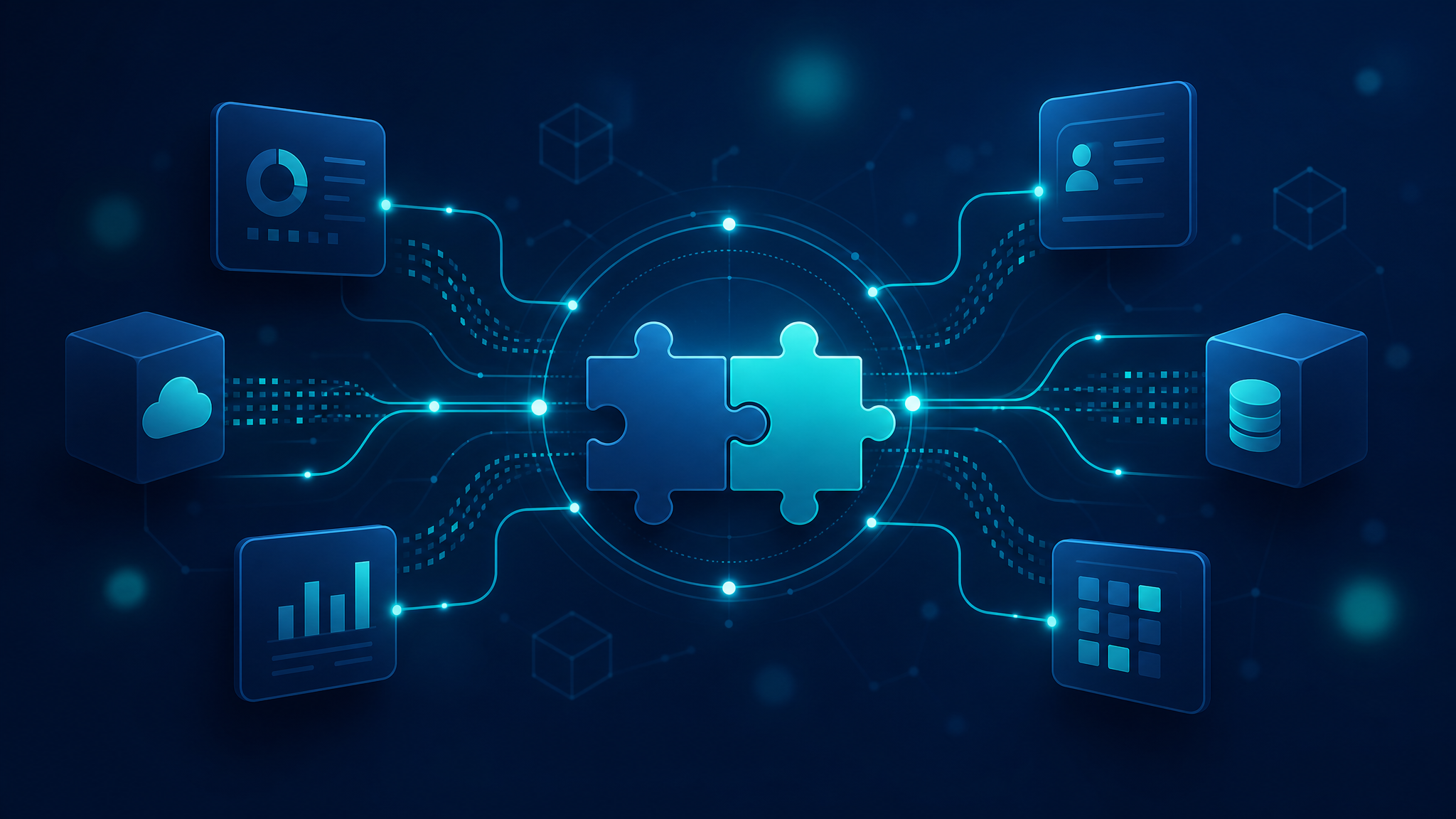
Most businesses run on a patchwork of tools that do not talk to each other. Someone exports data from one system and imports it into another, over and over, wasting hours and introducing errors. Integrations fix that.
This guide explains, in plain language, how connecting your software through APIs works, what it costs, and how to plan an integration that actually saves you time.
Yes, your existing software can usually be connected through APIs, so your tools share data automatically instead of relying on manual copying. Most modern business applications, from accounting and CRM to payment and email systems, offer APIs designed for exactly this. Integration cost depends on how many systems you connect, how well documented their APIs are, and how much data has to move between them, but the result is a set of tools that work together as one.
Get Instant Project Pricing
Describe your project in plain language and get a preliminary price range and timeline in minutes. No sales call required.
What is an API, in plain terms?
An API is simply a doorway that lets one piece of software talk to another in a structured, reliable way. When two tools are connected through their APIs, they can share data automatically. A sale in one system can appear in your accounting tool, or a new customer can flow straight into your CRM, without anyone copying and pasting.
What can be connected?
- Accounting and invoicing tools.
- CRMs and sales platforms.
- Payment processors.
- Email, messaging, and marketing systems.
- Inventory, shipping, and operational software.
- Your own custom apps and internal databases.
Describe My Project
Describe your project in plain language and get a preliminary price range and timeline in minutes. No sales call required.
What affects the cost of an integration?
| Factor | Effect on cost |
|---|---|
| Number of systems | More connections mean more work |
| API quality | Well-documented APIs are faster and cheaper to work with |
| Data complexity | More data and more rules take longer to map correctly |
| Real-time vs. scheduled | Live syncing is more involved than periodic updates |
How do I plan my integration?
Start by listing the tools you use and the manual steps you repeat between them, since those are your best integration candidates. Then describe what you want to connect in our AI Instant Quote system to get a preliminary estimate of what the integration would involve and cost.
Related service
API Development
Frequently asked questions
What if one of my tools does not have an API?
There are usually still options, such as scheduled data transfers or middleware, though they can be more limited. A developer can assess each tool and tell you what is realistically possible before you commit.
Will an integration break when my software updates?
Well-built integrations are designed to be resilient, but APIs do occasionally change. This is why ongoing support matters, so a small update can be handled quickly if a connected system changes.
Can integrations run automatically?
Yes. That is the point. Once set up, integrations move data on their own, either in real time or on a schedule, removing the manual copying that wastes time and causes errors.
Get My Instant Quote
Ready to move forward? Describe your project or paste an existing quote and see a preliminary price range and timeline in minutes.
Related questions
Keep exploring answers to common web app and software questions.
 Custom CRM
How Much Does a Custom CRM Cost?
A custom CRM usually costs between $25,000 and $100,000. Here is when it beats an off-the-shelf tool and what drives the price.
 Business Automation
How Much Does It Cost to Convert a Spreadsheet into a Web App?
Converting a spreadsheet into a web app usually costs between $10,000 and $50,000 depending on complexity. Here is what to expect.
 Customer Portals
How Much Does a Customer Portal Cost to Build?
A custom customer portal usually costs between $20,000 and $80,000 depending on features. Here is what moves the number.